As the Association of Clinical Research Professionals (ACRP) celebrates its golden anniversary this year, we are pleased to continue our series of Q&A interviews, “Forecasts from the ACRP Fellows: Insights on the Future of Clinical Research as ACRP Turns 50.”
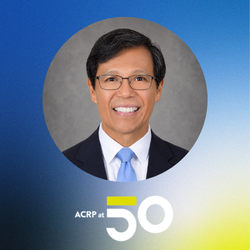
Our latest guest is Avelino Loquere, MD, RN, CCRP, CCRC, FACRP.
Q: For 50 years, ACRP’s mission to advance excellence in clinical research has empowered professionals like you to lead the industry forward. What’s a defining moment in your career when you felt proud to contribute to that legacy?
A: One defining moment was helping establish and lead clinical research operations for a community-based clinical research site that became part of major National Institutes of Health–sponsored clinical trial networks. It was incredibly rewarding to see the site successfully conduct complex Phase I–III clinical trials while maintaining high standards for participant safety, regulatory compliance, and data quality.
Just as meaningful was mentoring clinical research coordinators and research staff as they grew into confident professionals. Watching their growth reminded me that advancing clinical research is about more than completing studies. It is also about investing in the people who make those studies possible.
Looking back, I am proud not only of the studies we completed, but also of the people who went on to build meaningful careers both within and beyond clinical research. To me, that reflects ACRP’s mission of advancing excellence in clinical research.
Q: Over the past five decades, ACRP has evolved alongside seismic shifts in the research landscape—from paper-based processes to trials that are impacted by artificial intelligence (AI). How have those transformations impacted your own work, and how has ACRP helped you adapt?
A: When I began my career, essential documents lived in overstuffed paper binders, communication depended on phone calls and fax machines, and nearly every administrative task was manual. Today, electronic systems, remote collaboration, centralized oversight, and new tools, including AI, have transformed how clinical research is conducted.
Having worked across clinical research roles, from direct participant care and study coordination to site management and multi-site operations, I’ve been able to see those changes from several perspectives.
The foundation of good research, however, has remained the same: participant safety, ethical conduct, data integrity, and careful documentation. These principles continue to guide every successful study, no matter how much the process evolves.
ACRP has been a trusted partner throughout that journey. Since becoming a member in 2002, earning my CCRC certification in 2006, and being recognized as an ACRP Fellow in 2023, I have relied on ACRP’s education, conferences, publications, and professional community to continue learning and stay current with changing practices. It has helped me adapt to change while staying grounded in the principles that matter most.
Q: As the clinical research enterprise faces unprecedented challenges like funding pressures, public engagement, and regulatory uncertainty, what’s your outlook on the current state and future prospects of the drug and device development industry?
A: I remain optimistic because clinical research has always adapted to change, even during challenging times.
I believe we’ll continue to make important advances in developing new drugs and medical devices. Reaching that potential, however, will depend on how well we work together across sponsors, contract research organizations, investigators, and research sites while making research more accessible and continuing to build public trust.
That means reducing barriers to participation, engaging communities in meaningful ways, and being transparent about the research process.
While tools like AI will continue to streamline our workflows, technology should support human judgment, not replace it. No matter how advanced our platforms become, clinical research will always require experienced professionals who understand both the science and the responsibility that comes with protecting research participants.
What has kept me committed to this profession is knowing that every well-conducted study has the potential to improve healthcare for future generations. None of that is possible without the individuals who volunteer to participate in research. That purpose remains the same, regardless of how the landscape evolves.
Q: Are there any other insights you’d like to share with our readers based on the trends you’ve been witnessing in the trenches in recent years?
A: One thing that gives me hope is seeing more recognition for the entire research team. While investigators are often the public face of a study, successful clinical trials depend on clinical research coordinators, research nurses, regulatory specialists, pharmacists, laboratory professionals, data managers, community engagement teams, and many others working together. Their collective expertise allows a study to move forward safely and successfully.
I also encourage professionals, especially those early in their careers, to consider certification. Like many who entered clinical research years ago, I learned much of the profession through hands-on experience. Certification gave me confidence that what I had learned through practice aligned with recognized professional standards. It didn’t replace experience; it gave greater context to the experience I had already earned. It reinforced the importance of lifelong learning and strengthened my commitment to conducting research to the highest standards.
As ACRP celebrates its 50th anniversary, I believe the future of clinical research will depend as much on investing in people as it does on investing in technology. Technology will continue to evolve, but well-trained, ethical, and collaborative professionals will always be the foundation of high-quality clinical research.
About Avelino Loquere
An ACRP Member since 2002 and Fellow since 2023, Avelino is a clinical research professional with more than 20 years of experience coordinating and leading Phase I–III clinical trials across academic medical centers, hospital-based programs, and community research settings. Trained in both medicine and nursing, he brings an integrated clinical and operational perspective to clinical research. His clinical research career began at Harlem Hospital Center and continued at ICAP at Columbia University, where he supported federally funded and industry-sponsored clinical research programs. He has contributed to peer-reviewed research publications and earned the Certified Clinical Research Coordinator (CCRC) credential from ACRP in 2006. He is a founding member of the ACRP New York Metropolitan Chapter and served on its Board of Directors for 15 years, including as Chair of the Membership and Retention Committee. During his tenure, he helped support substantial growth in chapter membership and engagement.
About the ACRP Fellows
Being named a Fellow of the Association of Clinical Research Professionals (FACRP) is a mark of distinction. ACRP’s Fellowship program recognizes those who have made substantial contributions to the Association and the industry at large, as evidenced by: ACRP certification and continuing education, leadership contributions to ACRP, and contributions to the field of clinical research.
Fellowship highlights excellence and commitment to ACRP, and is suitable for only a small, select number of clinical research professionals who are lauded as global leaders.
Edited by Gary Cramer