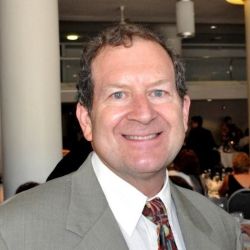
Alan Kivitz, MD, MACR, CPI, President and Founder of the Altoona Arthritis & Osteoporosis Center in 1982 and the Altoona Center for Clinical Research in 1992, was recognized among many others during ACRP 2025 for achieving remarkable longevity in their certification journeys. As a Certified Principal Investigator (CPI®) in Pennsylvania since 2004, he has seen a lot of evolution in the world of clinical research, and we are happy to share some of his experience and insight with our readers here.
ACRP: Please tell us a little about where you are from, your educational background, and how you first became involved in clinical research.
Kivitz: I was born and raised in the New York metropolitan area. I attended Rensselaer Polytechnic Institute in Troy, N.Y., for my undergraduate studies and went on to earn my medical degree from Albany Medical College. I completed my Internal Medicine internship at both North Shore University Hospital in Manhasset, N.Y., and Memorial Sloan-Kettering Cancer Center in New York, N.Y. I then completed my residency at both Memorial Sloan-Kettering and North Shore University Hospital, followed by a fellowship in Rheumatology at Albany Medical College.
I began my research career in 1991, focusing on nonsteroidal anti-inflammatory medications. A few years later, as clinical trials in Rheumatology rapidly expanded—particularly with the development of newer anti-inflammatory drugs such as COX-2 inhibitors—there was a growing need for more clinical trial sites. My practice stayed very active during that time and later became involved in the development and use of biologic therapies for inflammatory rheumatic diseases, starting in the late 1990s and continuing to this day.
Today, I continue to practice Rheumatology alongside three other Rheumatology physicians and six Advanced Practice Providers. My private practice, Altoona Arthritis & Osteoporosis Center, operates under the same roof as the Altoona Center for Clinical Research, which has grown steadily over the decades. In addition to Rheumatology trials, our center now conducts research in other areas, including weight loss, hyperlipidemia, vaccines, and smoking cessation, among others.
ACRP: What’s the environment for clinical trials like in the Altoona area compared to larger metropolitan areas?
Kivitz: Practicing in Altoona, Pa.—a more rural region—has its own unique aspects. Patients here are often used to traveling for healthcare, unlike those in large metropolitan areas who may be more reluctant to do so. At the same time, getting around in this region is much easier than navigating heavily congested cities.
ACRP: What prompted you to seek certification in the first place, and then to maintain your certification for 20 years and counting?
Kivitz: More than 20 years ago, I pursued certification as a clinical investigator because I felt it was important as my involvement in trials grew and as I began working with a wider variety of sponsors. While certification may not have been a major factor in recruiting participants, I believed it could help strengthen relationships with sponsors. I initially earned certification through DIA and later transitioned to ACRP, where I remain certified today.
ACRP: What have you found to be the most rewarding aspect of your work in clinical research in general, and as a certificant?
Kivitz: Being part of clinical trials has been an extraordinary experience, especially each time a new medication is approved. I’ve had the privilege of contributing to the development of every Rheumatology medication currently available and have often treated patients with these therapies years before they received U.S. Food and Drug Administration approval.
To me, being a strong Certified Principal Investigator means staying committed to continuous learning, adapting to evolving and increasingly complex protocols, and maintaining the highest standards in clinical research. While not everyone I encounter may fully recognize the CPI certification, I value it as a personal commitment to excellence, and I hope it will become more widely recognized across our industry in the years ahead.
Edited by Gary Cramer