Four executives discuss leadership as a clinical trial competency
The 2026 theme for Women’s History Month, celebrated in March, is “Leading the Change: Women Shaping a Sustainable Future,” highlighting women in leadership, sustainability, and equity. This milestone offers a great opportunity to celebrate the impact of women leaders.
Here, a group of high-achieving women—who will lead a Signature Series panel discussion at ACRP 2026—describe the leadership skills and learnings that helped advance their careers.
Michelle Rowe of HCA Healthcare: “Communications can make or break an initiative”
 “An early leadership role in the marketing communications team was particularly influential in my leadership path,” says Michelle Rowe, RN, Vice President, Research, HCA Healthcare. “This involved community outreach and employee wellness programming, teaching me the true value of communications. I learned the importance of intentionality—including the lesson that communications can make or break an initiative for the organization.”
“Throughout my career, I’ve worked with inspirational leaders who invested in me and motivated me to choose a career with a real impact,” notes Rowe. “One leader specifically, Jason Theadore, showed me the impact leadership could have on the culture of an organization and team. He taught me that you’re only as good as the people you surround yourself with. This gave me a firm foundation for my career, which focuses on moving healthcare and clinical innovations forward.”
“I’m lucky to have had opportunities for formal leadership training early in my career, which helped me identify and develop my leadership skills through multiple roles,” states Rowe. “I see my strengths as including communicating with impact and collaborating with others. Successful communication of core messaging is essential to sharing a vision, gaining stakeholder support to lead through changes, and helping teams to connect to an organization’s mission. I’ve never heard anyone say, ‘We communicated too much.’”
“Being a lifelong learner is critical to leadership,” according to Rowe. “Culture is vital to achieving goals, including investing in your team. I believe that ‘valued people create value,’ and that the best teams have a wide variety of skills, leading to well-rounded perspectives. As a leader, I aim to inspire action, and to lead my team to achieve a vision.”
“My advice for early-career clinical research professionals would be to get involved, build relationships through networking, join committees, take advantage of professional development opportunities, and keep asking questions,” says Rowe. “Everyone should look beyond their day-to-day responsibilities for chances to grow. Being open to new opportunities changed the trajectory of my career, with the challenges of the pandemic leading me to lean into research as a focus area.”
In describing women who inspired her career path, Rowe explains, “A few women have had a particular impact. My mother had a profound effect on me and my sisters, raising three strong, independent women. She put great value on hard work and education, encouraging us to pursue our passions and make a positive impact in our careers. We learned from her that women can do anything they set their hearts and minds on. I am also grateful to Dee Anna Smith, president of Sarah Cannon Research Institute, a leading oncology research organization conducting community-based cancer clinical trials. Dee Anna believed in me and helped me realize my leadership potential. Without her encouragement and support, I would not be where I am today. Additionally, Deb Reiner, Senior Vice President for Communications and Marketing at HCA Healthcare, has been a steadfast mentor and taught me about graceful leadership and the importance of caring for our teams and people.”
Jennifer Sheller of Merck: “Creating environments where people feel valued, connected, and empowered”
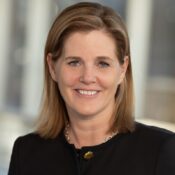 “I grew up in a home where my parents told us we could be anything we wanted—and I truly believed them,” explains Jennifer Sheller, ACRP-CP, Senior Vice President and Head, Global Clinical Trial Operations (GCTO), Merck. “That confidence was powerful, especially coming from a mother from a generation where career paths for women were often limited to teaching, nursing, or secretarial work. Watching her challenge those expectations sparked something in me early.”
“Team sports also played a major role in shaping who I became as a leader,” notes Sheller. “I loved the feeling of working toward something bigger than myself, and I naturally found myself connecting people, building camaraderie, and stepping into captain roles. That’s where I first learned how to bring a team together toward a shared goal. At the core of everything was curiosity—a genuine love of learning. That combination of belief, teamwork, and curiosity set the foundation for how I lead today.”
“Throughout my career, I’ve been drawn to challenges,” says Sheller. “I sought opportunities beyond my formal job description—places where I could add value, solve problems, and stretch myself. That mindset of questioning the status quo has stayed with me: Does this make sense? Is there a better way? What does the end user think? How are others doing it? I also prioritize collaboration. I love identifying people’s ‘superpowers’ and helping them shine. Creating environments where people feel valued, connected, and empowered has been central to how I lead.”
Sheller adds, “As my responsibilities grew, those same skills evolved into the ability to manage more complexity—broader teams, tougher problems, and decisions that require cross functional alignment. I’m a better leader today because I’ve always embraced learning, challenges, and the strengths of others.”
“I would advise early-career professionals first of all not to limit yourself to your job description,” says Sheller. “Master your role and then raise your hand. Look for opportunities to help others, to step into white space, and to add value. Second, invest in continuous learning—especially around technology and modern ways of working. Our field is evolving fast, and staying current is one of the best investments you can make in your own career. Third, surround yourself with leaders and thinkers who inspire you. These can be people you work with or authors and speakers you learn from. Some of the leadership concepts that have shaped my thinking include Jack Welch’s 4 Es of Leadership, Sallie Krawcheck’s Own It, Patrick Lencioni’s The Advantage, Jim Collins’ Good to Great, and interviews in How to Lead. They remind me that leadership is a craft—and we should all keep sharpening our skills.”
“I’ve been inspired by many women throughout my career—often in different and unexpected ways,” Sheller states. “Some demonstrated incredible calm and self control in moments of conflict. Others were bold in raising tough points or unapologetic about showing up authentically, including being open about family responsibilities. Seeing that modeled gave me permission to do the same. Ruth Bader Ginsburg has also been a profound source of inspiration. Her intellect, courage, and perseverance—being one of only nine women in a Harvard Law class of more than 500—is extraordinary. Her lifelong commitment to equality, for women and for the LGBTQ community, and her quiet but steadfast leadership continue to influence how I think about purpose and impact.”
“Women’s History Month is a powerful reminder that progress is built by many hands,” Sheller points out. “I’m grateful for the women who came before us, the colleagues who walk beside us today, and the next generation we’re helping to shape. Leadership is not about individual achievement—it’s about creating the conditions where others can thrive.”

Signature Series—Next is You: Leadership as a Clinical Trial Competency
Join Michelle, Jennifer, Muriel, and Susan at ACRP 2026 [April 24-27; Orlando, Fla.] as they share insights into their career journeys, the leadership skills that fueled their growth, and the pivotal moments that defined their paths. View complete schedule.
Susan Landis of ACRP: In tough times, find someone who will “reassure you that you’re a rock star”

“My ‘path to leadership’ was driven mostly by curiosity and exploration,” says Susan Landis, Chief Executive Officer of ACRP. “While I didn’t realize it at the time, I was drawn to work in sectors that were emerging—telecom, data, technology—and in areas where I had not worked. Importantly, I had a core skill set, marketing and communications, that I chose to apply in areas where I didn’t have knowledge—but then gained it.”
“My boss for my college internship was the first woman executive in NBA history,” Landis shares. “She was an unapologetic strong leader and knew how to navigate the politics of any situation. My first real boss was the opposite. The distinction was an important reflection for me in my late twenties of who I was at my core—the internship boss. My focus has been on developing this core.”
“The leadership skills that helped to build my career included being able to quickly synthesize information and frame recommendations that enable people to take action,” states Landis. “Coupling this with curiosity about the subject lets me strike gold.”
Landis advises early-career professionals that, “You will invariably be in a situation that will make you feel that you may not be the expert you are. It will feel absolutely lousy—for a bit. Make sure you have a sounding board friend or partner who will reassure you that you’re a rock star.”
Muriel M. Wilkins of Paravis Partners: “Mindset is often the biggest roadblock to effective leadership”
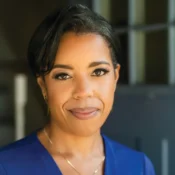 “The roles I held before starting my own business, Paravis Partners, informed my path to leadership,” says leadership adviser Muriel Maignan Wilkins, CEO and Founder, Paravis Partners. “Probably the most influential one was my first experience as a senior executive, facing the challenge of working with peer stakeholders. At a critical moment, rather than looking at others, I took a good look at myself and how I was contributing. This changed my philosophy about what leadership means—and I became very curious about this topic. My career as an executive coach followed, built on understanding myself and others. I realized early that not everything is within my control, and that complex situations require resourceful approaches.”
“Each stage of my career has demanded different leadership skills,” Wilkins points out. “At the earliest stage, I benefited from the ability to understand key senior stakeholders’ needs and to fulfill these. I effectively provided a service, adding value to the business by ‘getting the job done.’ The ability to manage up was critical, helping gain backing from senior executives who could support the advancement of my career. The baseline is to deliver results. After that, there are benefits from improved visibility and communications.”
“One trait I have nurtured throughout my career is resourcefulness,” continues Wilkins. “I learned to find innovative ways to get things done. Not getting bogged down by ‘how’ a project could be done enabled me to focus first on ‘what’ needed to be done. Resourcefulness helped me work out how to move forward.”
“A person’s mindset is often the biggest roadblock to effective leadership,” asserts Wilkins. “As I mention in my new book, ‘Leadership Unblocked: Break Through the Beliefs that Limit Your Potential,’ many leaders spend their energy trying to control others—stressing and ruminating on how to force a situation to bend to their will—when instead they should be focusing on themselves.”
“People may believe that approaches that worked in the past will continue to be effective in future,” says Wilkins. “In fact, ongoing change means that new approaches are likely to be needed. Becoming too attached to a particular recipe or ingredient that has worked in the past may block future success. As executive coach Marshall Goldsmith’s book title explains, ‘What got you here won’t get you there.’”
“It may seem to executives that their leadership efforts are being blocked by their company’s culture, by a group of people, or by an individual,” according to Wilkins. “In reality, this may be true, but the important question is what’s within your control. Everyone has choices, such as whether they prefer to stay and try to change the culture, or leave and find a new role in a different culture. My philosophy is that there is never one right answer, rather a series of trade-offs, and that these require clear-eyed examination. Whether to stay or leave depends on which trade-offs are acceptable. Making this type of choices is a sign of leadership maturity and adulting.”
“Many women have inspired me,” notes Wilkins. “First, my mom, who had only a high school education, yet traveled the world with my dad. I had a front-row seat to see how she embraced resourcefulness. Second, my close circle of women friends. All are professionally successful and live authentic, grounded lives. They live out the saying that one of them quotes often, ‘I know whose I am and I know who I am.’ The power of women being in community has been inspirational for me, providing a great source of support. I wish for that kind of friendship for all women—to be honest with each other, celebrate one another, and lift one another up.”
Edited by Jill Dawson