Did you know that, like the boards for many other types of organizations, the ACRP Board of Trustees includes a public member—someone who is not a clinical research professional—whose role is to champion the public or consumer interest in the drug and device research and development enterprise? They are chosen to bring new ideas and goals to the table, contribute an unbiased perspective, encourage consumer-oriented positions, and offer additional public accountability and responsiveness.
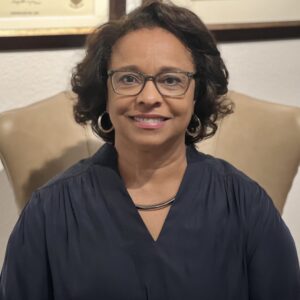
We asked Toni Willis, MD, FAAPMR, the current ACRP Public Member, to share some background on her career and how she came to serve in this volunteer role.
Q: Can you tell us a little about where you’ve been along your career roadmap and where you are now?
A: I am a Physical Medicine and Rehabilitation physician with 21 years of experience serving as the Medical Director of Inpatient Rehabilitation Hospitals in Dallas/Fort Worth, Texas. I have experience in medical staff leadership, managing rehabilitation hospital operations, leading an interdisciplinary inpatient rehab team, and providing effective patient care. I am also a survivor of stage four triple negative breast cancer (TNBC).
I was diagnosed with early breast cancer in 2013 and with metastatic breast cancer (MBC) upon its recurrence two years later. After retiring from the practice of medicine, I completed the Living Beyond Breast Cancer (LBBC) Hear My Voice Advocacy training program. Through this organization, I found my voice in the MBC community. I have served as a panelist and moderator on several LBBC webinars and MBC conferences. My advocacy interests are improving access to medical care for all individuals and increasing patient involvement in clinical trials.
Q: What was your familiarity with clinical research before you came to serve as the Public Member of the Association Board of Trustees, and how did you learn of ACRP and this role in the first place?
A: As a practicing physician, I often relied on clinical research to help guide me in treating various conditions that my patients were dealing with. However, clinical research had a more personal impact on me when I was offered a clinical trial immediately after I was diagnosed with TNBC. My oncologist was one of the principal investigators of a clinical trial that was exploring whether adding a new drug to the standard of care treatment protocol would prevent breast cancer recurrence.
I received the investigational drug, but I could not complete the study because my tumor doubled in size during the treatment. Years later, when my cancer did recur, the chemotherapy that I was prescribed, carboplatin, had just been proven in a clinical trial to be effective in the treatment of TNBC. The prognosis of metastatic breast cancer at that time was three to five years of survival. Fortunately, my tumors were very sensitive to carboplatin and I achieved a complete pathological response in approximately one year of treatment with no evidence of cancer on PET scan.
However, each time I stopped treatment, my cancer recurred. I have survived MBC for 11 years and my PET scans have shown no evidence of cancer this year for the fourth time since my MBC diagnosis in 2015 after 96 cycles of carboplatin. Because I am living proof that clinical research saves lives, I have focused on clinical research advocacy and encourage patient participation in clinical trials.
I am also a consumer reviewer for the Congressionally Directed Breast Cancer Research Program and a member of Guiding Researchers and Advocates to Scientific Research Partnerships (GRASP). As the new Public Member of the ACRP Board of Trustees I look forward to providing both a physician and patient/consumer perspective in this role.
Q: What clinical research issues or challenges are top of your mind for helping the Board of Trustees address?
A: I am still learning a lot about the clinical research process, research regulations, and the roles that each clinical research professional plays in the process. The ACRP 2026 conference in Orlando was the best opportunity for me to jumpstart my educational journey. I was also honored to share the story of my breast cancer journey and experience as a clinical trial participant at the ACRP 50th Anniversary Celebration during the conference.
During my term on the ACRP Board of Trustees, I am interested in exploring avenues to encourage more physicians to consider a career in clinical research. As a patient advocate, I want to continue my work to increase access to and diversity in clinical trial participation to help decrease healthcare disparities.
Edited by Gary Cramer