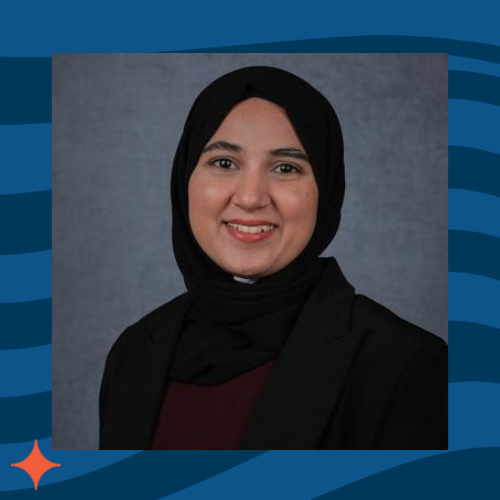
Like the flapping of a butterfly’s wings contributing to a hurricane on the other side of the globe, unforeseen problems related to the use of artificial intelligence (AI) in clinical research settings may begin with a very small, ordinary decision—one person trying to save a few minutes during a hectic day—that sets off a chain of consequences across a study. That’s what Sahar Zahid, MD, is getting at when she talks about the “butterfly effect” of such actions as a single copy-and-paste from a source document into an AI tool by one professional potentially having repercussions downwind for participant privacy, sponsor confidentiality, contractual obligations, institutional policy, vendor governance, data security, study integrity, and organizational trust.
“The original action may take 30 seconds, but understanding its consequences requires looking at the entire research system,” says Zahid, a global clinical research and regulatory science professional and graduate student in clinical research management at Arizona State University. Her upcoming ACRP 2027 presentation, “Can I Put This Into AI? Clinical Trial Privacy Pitfalls,” will examine the brave new world of AI-induced challenges tied to study protocols, case report forms, patient-reported outcomes, and other trial-related data and documents during the April 30–May 3 gathering in San Diego, Calif.
Consider these scenarios, Zahid notes: A clinical research coordinator (CRC) has spent all morning managing participants and documentation and needs to draft a deviation narrative before leaving, so she removes the patient’s name, pastes the details into an AI tool, and asks it to clean up the language. Or a clinical research associate (CRA) receives a lengthy monitoring report with no obvious patient identifiers and uses AI to summarize the findings before an internal meeting. Or a trial manager asks AI to compare two versions of a protocol and identify what changed between them. Or an institutional review board (IRB) member asks AI to condense a lengthy proposal for a new study.
“Nothing malicious happened in any of these cases,” Zahid explains. “These professionals were simply trying to work efficiently. But their actions lead to many questions: Was the information actually de-identified? Was the tool approved? Who owns these documents and are they confidential? What did the sponsor agreement permit? Can AI-generated summaries inadvertently omit context that matters to ethical review? Has study information now left the controlled research environment? Does the organization even have a policy addressing this workflow?”

Can I Put This Into AI? Clinical Trial Privacy Pitfalls
Join Sahar at ACRP 2027 [April 30-May 3; San Diego, Calif.] as she provides a practical discussion of common AI-use scenarios encountered across sites, contract research organizations, sponsors, and institutional review boards. View complete schedule.
Whenever study details are exposed to AI and they may contain confidential sponsor information, site performance issues, protocol deviations, investigational product information, or other restricted material, Zahid says the privacy/confidentiality question suddenly becomes much larger than “Does this contain protected health information as defined by the Health Insurance Portability and Accountability Act?”
“Despite all the cautions, I also want to challenge the instinct that the solution is simply ‘never use AI,’” adds Zahid, who is also Secretary of the ACRP Chicagoland Chapter. “Clinical research professionals are already finding legitimate ways to use these tools. The more useful question is whether organizations have created enough structure around that use. If a CRC, CRA, trial manager, or IRB professional has to decide alone whether something is safe to upload, that may itself indicate a governance gap. My goal for the session is to follow these everyday decisions through their downstream consequences and give these professionals a practical way to pause at the beginning of that chain; not after something has already gone wrong.”
Edited by Gary Cramer