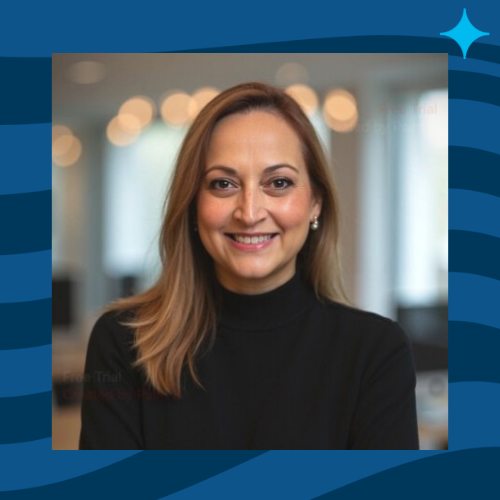
From surviving her “sink or swim” introduction to clinical trials to leading major studies and multiorganizational research efforts, Jeri Burr, RN, PED-BC, MS, CCRC, FACRP, Program Director of the HEAL Pain Management Effectiveness Research Network, Data Coordinating Resource Center, at the University of Utah School of Medicine, has experienced the clinical research enterprise from more angles than she ever expected—both as a professional and as a parent and grandparent.
Having recently been recognized among other milestone certificants for maintaining her Certified Clinical Research Coordinator (CCRC®) status through ACRP for 25 years as of 2024, Burr, who is also an ACRP Fellow (FACRP) since 2018, generously shared some memories and lessons learned from her career with ACRP’s Managing Editor.
ACRP: Please tell us a little about where you are from, your educational background, early career goals, and how you first became involved in clinical research.
Burr: I grew up in a small town in Utah, and ever since the sixth grade, I knew I wanted to become a nurse. I’ve always loved caring for others, and that passion led me to earn my RN by the age of 20, just three years after graduating high school. Over the next decade, while raising my children, I worked in various hospital settings in Utah and Albuquerque, N.M. It was in Albuquerque that I began specializing in pediatrics—and I quickly discovered how deeply rewarding it was to care for children.
When I moved back to Utah, I was hired to work on a busy Infant/Toddler Unit at Primary Children’s Hospital in Salt Lake City, where I spent seven fulfilling years. It was there that I had my first real exposure to clinical research. I was invited to participate in a collaborative working group aimed at developing a bronchiolitis assessment tool for children with RSV. To my surprise, I found the research process both intellectually engaging and meaningful.
Like many in the field, I transitioned into clinical research somewhat unexpectedly. After years of working nights, weekends, and holidays, I was ready for a change and accepted a position as a research coordinator in Pediatric Neurology, focusing on epilepsy trials. That role opened the door to a new and exciting chapter in my career. Just a few years later, I was helping launch a pediatric pharmacology program and managing a large multicenter clinical trial for pediatric congestive heart failure. During this time, I pursued and earned an MS in Clinical Research Organization and Management to enhance my ability to lead and contribute to complex multicenter clinical trials.
These experiences eventually opened the door to consulting and teaching Good Clinical Practice (GCP) in clinical research. They also led to leadership roles directing large research networks, ultimately serving as Executive Director of the Utah Trial Innovation Center for seven years. Although I spent 17 years at the bedside, I never imagined I would build a career in clinical research. Now, 28 years later, I’m proud to have contributed to impactful, cutting-edge studies and published work that advances pediatric and adult clinical care, ethical research practices, innovations in clinical research science, and pain management effectiveness.
ACRP: Did your career progression go pretty much as planned, or did it take some unexpected detours along the way?
Burr: It has been both rapid and incredibly rewarding. Entering the field with so much bedside nursing experience gave me a strong foundation, allowing me to progress more quickly than a typical entry-level coordinator. Within two years of coordinating trials and earning my CCRC certification, I was offered the director position with the pediatric pharmacology program that I mentioned earlier.
From there, my career continued to evolve into operational leadership across research networks and large multicenter trials. I’ve also had the opportunity to consult and mentor, which has been one of the most gratifying parts of my journey.
At a recent local meeting on clinical research opportunities in Australia, held at the World Trade Center in Salt Lake City, I unexpectedly reconnected with someone I had hired nearly 20 years ago as a project manager for a Pediatric Critical Care Research Network. He now leads clinical trials for a biotech firm. After greeting me warmly, he said, “I use something you taught me at least three times a day.” That moment was a powerful reminder of the close-knit, collaborative nature of the research community. No matter where I go, I often cross paths with colleagues I’ve known or worked with before. We’re all united by a shared mission: to improve lives through evidence-based advances in medications, biologics, devices, behavioral therapies, and integrative treatments.
I wouldn’t say there were any detours. If anything, the path advanced so quickly that I’ve remained in senior roles for quite some time. It’s been a fulfilling journey, and I’m grateful for the opportunities I’ve had to grow, lead, and give back.
ACRP: How did you first learn about and join ACRP? What prompted you to seek certification in the first place, and then to maintain your certification for 25 years and counting?
Burr: When I was first hired as a research coordinator, there was no formal training, no orientation—just, “Here’s your desk.” I was handed six months’ worth of incomplete triplicate paper case report forms and told to reconstruct the data by reviewing patient charts. At that point, I had never even heard of GCP, and I knew very little about clinical research.
Thankfully, an experienced industry monitor (CRA) kindly suggested I attend a weeklong course on GCP and grants/contracts in Atlanta. That course was transformative. It laid the foundation for my research career and opened my eyes to the complexity and importance of clinical research. The instructor was a strong advocate for ACRP, and I learned that after two years of coordinating studies, I would be eligible to sit for the CCRC exam. That certification became a major milestone—and the rest, as they say, is history.
Not only have I maintained my certification for more than 25 years, but ACRP has been a cornerstone of my professional journey. As my career progressed, I became increasingly involved: I helped start our local chapter, served as chapter president, and held several other leadership roles. Eventually, I began volunteering at the national level and was honored to be invited to apply for Fellowship. I became an ACRP Fellow in just the second year of the program and have served as Chair of the Fellows’ Advisory Panel.
ACRP has provided me with a professional home, a network of like-minded colleagues, and a platform to give back to a field I care deeply about. Maintaining my certification all these years has been both a commitment to excellence and a reflection of my dedication to the clinical research profession.
ACRP: What’s the most surprising thing you have learned about this profession in your experience? How about the most rewarding thing?
Burr: One of the most surprising things I’ve learned about this profession is how much responsibility clinical research professionals carry, especially when working with principal investigators (PIs) who are new to research. I’ve seen research-naïve PIs receive multimillion-dollar awards, and it’s often up to professionals like me to guide them, ensure regulatory compliance, and essentially keep the study (and sometimes the PI) on track. I was once told it was my job to “keep the PI out of jail”—and, honestly, there’s some truth in that!
The most rewarding aspect, without question, is knowing that the work I do truly makes a difference. Every day, I see how research leads to real change—life-saving treatments, improved quality of life, and hope for families who previously had none. I’ve watched therapies emerge for diseases that once had no options, and it’s deeply fulfilling to play even a small role in those breakthroughs.
This work is also personal to me. I have seven wonderful grandchildren, and each one has been touched in some way by clinical research:
- My oldest grandson has a rare autoimmune disease, eosinophilic esophagitis. For years, he endured a restrictive diet. Today, thanks to a newly approved biologic therapy—developed through clinical research—he can eat a more normal diet without triggering inflammation. As a longtime institutional review board member, I’ve reviewed many of the studies that helped lead to therapies like this. It’s amazing to see their real-world impact on someone I love.
- My second grandson was hospitalized as an infant with severe RSV bronchiolitis. As I watched him receive care, I saw nurses using a bronchiolitis scoring tool I helped develop years ago. It was a profound moment—seeing my past work directly supporting his recovery.
- My beautiful granddaughter and twin grandsons are here today because their father, my son, survived a NICU stay for aspiration pneumonia as a newborn. Life-saving medications, approved through clinical trials, helped him survive respiratory failure. That full-circle moment, watching him grow up to become a parent, still takes my breath away.
- Even routine things, like my children getting Tdap vaccines during pregnancy to protect their babies, are tied to the research I’ve contributed to and published on—specifically studies on critical pertussis. These advances benefit not only U.S. children but also the 500,000 children globally who still die each year from this preventable disease.
- Currently, I’m supporting the National Institutes of Health’s HEAL (Helping to End Addiction Long-term) Initiative®, which aims to address the opioid crisis through prevention, treatment, recovery, and research. This work feels especially urgent, as the opioid epidemic has touched nearly every family, including my own circle of friends and loved ones. My team helps streamline complex, multicenter trials, improve access to innovative pain management research, and accelerate the path from discovery to delivery of safe, effective treatments…alternatives to opioids for pain.
After all these years, I remain inspired by the power of clinical research—not just as a profession, but as a force for healing and hope.
ACRP: Do you have one or two particularly memorable experiences in terms of interactions with trial participants and/or professional colleagues that you would like to share?
Burr: One particularly memorable experience was during my early days as a coordinator working on pediatric epilepsy trials. Many of the children in those studies experienced multiple seizures a day, and their parents were often devastated, overwhelmed, and desperate for answers. It was incredibly rewarding to work closely with them—supporting them through long, often emotional visits, carefully collecting paper diaries, reviewing patient-reported outcomes, and completing detailed assessments.
At the time, I didn’t fully grasp the long-term impact of that work. I was simply doing what I thought was right—taking the time to be thorough, supportive, and present. Now, years later, that experience has come full circle in a deeply personal way: one of my grandsons has been diagnosed with epilepsy and is taking the very drug those families helped test by participating in those early trials.
It’s a powerful reminder that clinical research doesn’t just advance science—it touches lives in lasting and often unexpected ways. Those parents weren’t just seeking help for their own children; they were helping to create hope for future families like mine. I’m grateful every day for their courage, and proud to have played even a small part in that journey.
ACRP: Can you share one or two examples of “lessons I learned on how to be a great CRC” with your fellow clinical research professionals?
Burr: One of the biggest lessons I’ve learned as a CRC is this: no matter how much you think you know, there is always more to learn. This field is constantly evolving, and investing time to truly understand the regulations and GCPs will pay tremendous dividends—not only for your career growth, but more importantly, for the safety and rights of the participants who place their trust in us.
Being a great CRC means being a jack of all trades. You’ll juggle competing priorities—regulatory requirements, protocol compliance, patient care, data accuracy, and sponsor expectations—often all in a single day. But once you’ve mastered the technical skills, success often comes down to something simpler: how you treat people. Patients, families, colleagues, monitors, and investigators all remember how you made them feel. I have a sign in my office that says, “In a world where you can be anything, be kind.” That’s a core principle I live by in this work.
And if you’re ever feeling overwhelmed or unsure whether you’re “cut out” for research, here’s a reminder I love to share—10 things you can do that require zero talent, but make all the difference:
- Being on time
- Making an effort
- Bringing positive energy
- Having a good attitude
- Showing passion
- Using respectful body language
- Being coachable
- Going the extra mile
- Being prepared
- Demonstrating a strong work ethic
These habits can set you apart and build a foundation for long-term success in clinical research. Skills can be taught—but character, consistency, and kindness are what make someone truly great in this role.
Edited by Gary Cramer