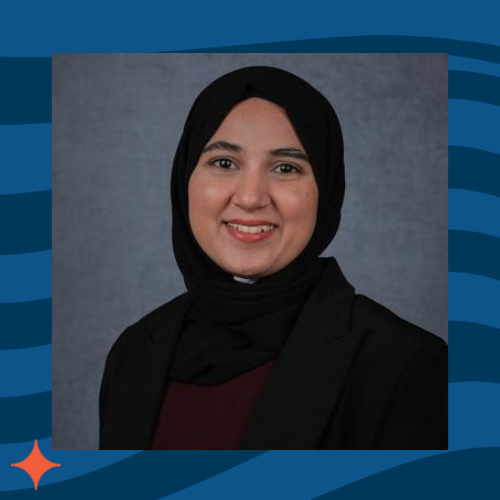
As the Association of Clinical Research Professionals (ACRP) celebrates its golden anniversary this year, we are pleased to continue our series of Q&A interviews, “Forecasts from the ACRP Fellows: Insights on the Future of Clinical Research as ACRP Turns 50.”
Our March guest is Suzanne M. Kincaid, CCRA, ACRP-PM, FACRP.
Q: For 50 years, ACRP’s mission to advance excellence in clinical research has empowered professionals like you to lead the industry forward. What’s a defining moment in your career when you felt proud to contribute to that legacy?
A: For me, 2020 felt like the culmination of seeing what we do in action. Clinical trials became part of a global conversation, and it was an opportunity to educate at every turn. That was also the year I became a Fellow, and hearing how these highly experienced professionals were keeping a whole industry moving forward is a time I will always cherish.
Q: Over the past five decades, ACRP has evolved alongside seismic shifts in the research landscape—from paperbased processes to trials that are impacted by artificial intelligence (AI). How have those transformations impacted your own work, and how has ACRP helped you adapt?
A: ACRP has been the organization out in front of developments that impact our industry. I’m thinking here of how the Association has approached risk-based quality management, decentralized trials, AI use in clinical research, and the ICH E6(R3) guideline for Good Clinical Practice.
ACRP was my first source for information and education and remained my touchstone. ACRP has helped me grow as a professional into being at the forefront of emerging trends. Early in my career, I felt like a late adopter relying on my employer to figure it out. Now I am part of the conversations on the front end. I am especially pleased with the trainings ACRP has developed in ICH E6(R3) recently.
Q: As the clinical research enterprise faces unprecedented challenges like funding pressures, public engagement, and regulatory uncertainty, what’s your outlook on the current state and future prospects of the drug and device development industry?
A: I chose this career path because there will always be interest in developing new treatments. The integrity of the scientific method is not wavering. I believe AI is the nudge our industry needed to streamline drug discovery and development and reduce the massive amounts of duplicative effort we have found it so difficult to escape left to our own devices.
Q: Are there any other insights you’d like to share with our readers based on the trends you’ve been witnessing in the trenches in recent years?
A: ACRP has been a constant in my professional life. Even though it’s an organization, I think of it as a friend. And it’s been my friend for a long time.
About Suzanne M. Kincaid
An ACRP Member since 2003 and ACRP Fellow since 2020, Suzanne has a history of activity with ACRP’s Greater Nashville, New York Metropolitan, and Research Triangle Park Chapters, and has served the Association on the Fellows Advisory Panel and as an Item Writer for certification exams. She has extensive expertise in early-phase drug development, oncology, hematology, neurology, gastroenterology, and building high-performing teams. Currently the Owner and Principal Consultant of Responsibility Research Consulting, LLC, based in Nashville, Tenn., she is also a former COO of Aperio Clinical Outcomes, former Director of Operations at Sarah Cannon Research Institute, and former Manager of Clinical Development for Protherics (a BTG Company). She has also held positions with AstraZeneca, Theradex, and the Nashville Medical Research Institute. She earned her bachelor’s degree in business administration from Lipscomb University.
About the ACRP Fellows
Being named a Fellow of the Association of Clinical Research Professionals (FACRP) is a mark of distinction. ACRP’s Fellowship program recognizes those who have made substantial contributions to the Association and the industry at large, as evidenced by: ACRP certification and continuing education, leadership contributions to ACRP, and contributions to the field of clinical research.
Fellowship highlights excellence and commitment to ACRP, and is suitable for only a small, select number of clinical research professionals who are lauded as global leaders.
Edited by Gary Cramer