This is a sponsored message.
I first became a clinical research coordinator (CRC) in 2004, and I love my job. But there is a part of being a CRC that no one talks about enough: the mental weight of always having so much in motion.
As a CRC, you are always thinking three steps ahead because there is no room to miss a detail that might matter. And in this job, they all matter.
That pressure builds quietly. A day before a study participant even walks in, I am already reviewing adverse events and lab reports, checking visit-specific lab kits, and whether samples have to ship the same day or go out on dry ice before the pickup cutoff. Then the day starts, and the real-time crunch starts with it. A participant tells you they forgot to fast. A vital sign is high. A lab kit is missing the right tubes. Someone needs an answer right now.
It is not just a busy job; it can be a mentally demanding one too. And for a long time, I thought this mental pressure was simply the price of doing this work well.
What has kept me in this work all these years is not the paperwork, the portals, or the endless checking. It is the people. It is the study participant sitting in front of me, trusting me. It is the chance to be part of research that could help someone have another birthday with the people they love. That sense of purpose has always made the hard parts of being a CRC worth it.
But the hard parts are real.
They can pull your attention away from the human side of the job and into a constant cycle of searching, verifying, and trying not to miss anything. So when I was introduced to Peter The Protocol Reader, an artificial intelligence (AI) assistant by Care Access designed to help you answer study questions faster, I did not feel excited. I felt skeptical.
I reluctantly gave it a try.
There was no long training. I did not have to sit through hours of modules just to get started. I just asked a question, the same kind of question I was already spending so much time looking up on my own. Peter gave me a response in seconds. Peter linked me directly to the relevant sections of the protocol and supporting documents, so I could read them myself.
Of course, I verified everything. Any seasoned CRC would. I needed to see how Peter worked, how to phrase questions, and whether I could trust what Peter returned. But the more I asked, the more I realized Peter was helping me get to the right place much faster than I could on my own.
One practical moment cemented this for my team early on: our imaging vendor dropped out and we desperately needed another in place quickly; the timing could become a problem for our upcoming participant visits. I remember opening the Peter mobile app on my phone, asking Peter the question, “Which visits require an MRI?” Within seconds Peter pointed me to the section of the schedule of assessments that showed we actually had plenty of time. In a moment that could have turned into a long discussion and a lot of unnecessary worry, Peter helped the entire team get grounded faster.
I have seen the same thing with investigational product questions too. Sometimes the answer is partly in the protocol, partly in the pharmacy manual, and partly in the practical details of preparation, administration, or accountability. Before Peter, that could mean a lot of back and forth across multiple documents. Now I can get oriented in minutes, not hours.
That is when Peter stopped feeling like one more thing to manage and started feeling like real support. I always tell people Peter is the assistant I never dreamed I could have.
Peter does not replace my judgment. I read the study documents. I still reach out to the sponsor for clarification, talk to the principal investigator, and need to think critically. But I spend less time hunting, rereading, and second-guessing. I can get there faster and move on without the anxiety that I might be missing something.
For me, the real value isn’t just that it relieves some of my burden. It is not just that Peter saves time. It is that Peter gives me more control over my day and more mental clarity to focus on the participant in front of me. After all these years as a CRC, that is something I never expected AI to give me.
Visit AgentPeter.ai to learn more about Peter The Protocol Reader.
Going to ACRP 2026? Don’t miss Easing Pressure on Site Teams: Peter The Protocol Reader on Saturday, April 25, from 3:00 – 3:45 PM. Hear directly from sites about how Peter The Protocol Reader is helping give time back each day. You’ll also hear why sponsors like Merck are embracing Peter for their sites and what sponsors require when AI is used for their studies.
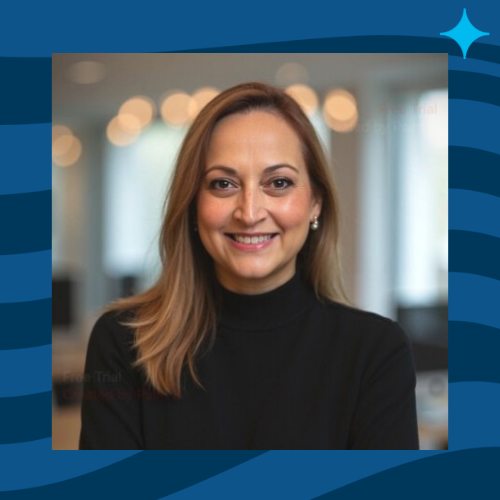
Authored by Marjorie Rivera, Clinical Research Coordinator, Care Access
Marjorie Rivera has been in clinical research for 22 years, starting as a clinical research coordinator (CRC) in 2004. She worked briefly as a clinical research associate before returning to the research site and today is a CRC at Care Access in Huntington Beach.