
Clinical Researcher—October 2026 (Volume 40, Issue 5)
PEER REVIEWED
Holly Bookless, BSN, RN, NE-BC; Emily Brown; Lisa Hafer, MPH, CCRP; Melica Nikahd, MS; Deanna Golden-Kreutz, PhD; Paula Smailes, DNP, RN, CCRP, ACRP-CP, FACRP
Measuring the patient experience is vital in healthcare organizations today. From a customer service perspective, when patients are satisfied with their experience, they are more likely to solicit repeated services from healthcare organizations and their providers.
To measure this experience, standardized satisfaction surveys are used in healthcare that possess validity and reliability, such as Press Ganey, the Patient Satisfaction Questionnaire Short Form (PSQ-18), the Picker Patient Experience Questionnaire (PPEQ-15), and the Consumer Assessment Health Plans (CAHPS).{1} Results from these surveys are now posted publicly so that patients can seek healthcare services as informed consumers of care.
This feedback matters and becomes increasingly important in influencing the financial bottom line of healthcare organizations. Because measuring satisfaction clinically is value-added for healthcare organizations, it is meaningful to engage in this activity for clinical research settings.
Satisfaction in Clinical Research
It has been noted that when considering patient outcomes in clinical trials, the participant experience and satisfaction are sometimes missing from the data{2} or not considered outside the direct intervention.{3} While patients seek healthcare organizations based on therapeutic need for themselves or their families, those who participate in clinical research may have a different motivating factor.
People may volunteer for clinical research based on their healthcare condition; a desire to “give back” by contributing to science; or access to supplies and services, among other factors.{4} For some clinical cases, such as oncology, a clinical trial may be the only medical option that remains if standard of care treatments are exhausted.
Regardless of the rationale, it should be noted that research participants are volunteers and not required to participate in studies. That salient point makes knowing the experience of this population crucial to ensure that research organizations deliver services that promote participant engagement with an overall positive experience. As one study showed, findings such as adequate time for consent can increase participant satisfaction, along with considering clinical trial barriers such as travel distance and socioeconomic status.{5}
Measuring research satisfaction is commonly seen in the literature using a satisfaction survey. For instance, Adler et al.,{6} used a participant satisfaction survey focusing on delivery of care, environment, and center operations to better engage research volunteers from all racial and ethnic populations in clinical trials. Considerations from research feedback include measuring the phase of study the participant is in with feedback related to such items as food service to sleep.{1} Pfugeisen et al.{7} believed that a satisfaction assessment of clinical research populations provides valuable insight into clinical trial participation and perceptions of healthcare organizations where the research took place.
Satisfaction in a Clinical Research Center
In the early 2000s, there was a realization that the General Clinical Research Center (GCRC) at The Ohio State University was not part of the organization’s Press Ganey satisfaction surveys, yet its leaders possessed a desire to better understand satisfaction for those research participants using its services. At the time, the GCRC received funding from the National Institutes of Health (NIH). This is important because NIH site visits occurred, making research participant satisfaction data even more important to show quality in operations.
In 2008, the GCRC changed its name to the Clinical Research Center (CRC) and changed funding mechanisms. By 2010, the CRC’s leaders were participating in a Research Subject Satisfaction Taskforce that included other sites from around the clinical research enterprise of the academic medical center (AMC), as well as staff from the Centers for Clinical and Translational Science (CCTS). These groups were committed to providing an outstanding participant experience for those in clinical research studies at the AMC.
With this collaboration, a research participant satisfaction survey was developed, placed in REDCap, and housed within the CCTS. The goal was to create a survey that was universal to any clinical investigator and research site across the organization. A pilot study was developed and once approved by the institutional review board, the Research Participant Satisfaction Survey was tested across participating sites, including the CRC.{8} After the pilot study completed, the instrument was made available to all research sites and investigators using a CCTS request. A unique survey link was created specific to the study investigator or research site. The aim of this descriptive study is to understand research participant satisfaction in the CRC over time and use the feedback to provide a better participant experience.
Survey Creation and Implementation
A research participant satisfaction survey was initially developed in the early 2000s to be disseminated to participants in a paper format. Key to the development was the exclusion of questions about conditions at the facility that were beyond the control of the GCRC, such as those related to parking. Questions asked included items related to consenting, privacy, staff professionalism and knowledge, overall care provided, way finding, cleanliness, noise, meals, and accommodations. These questions were presented in a five-point Likert scale along with a comments box for capturing additional feedback. To facilitate data analysis over time, Teleform was used. Completed surveys could be placed into Teleform, which resulted in machine-readable data from a high volume of surveys, then exported into databases.
Beginning in 2013, a transition was made from Teleform to REDCap as part of the pilot study using the newly created Research Participant Satisfaction Survey. For survey completion, participants would be given an anonymous link with no means to determine who completed it that was specific to both investigator and protocol.
Consideration was made for the length of time the subject was expected to participate in the study. For example, if the study was five years long, a survey may be given halfway through study participation. Within the CRC, if only one study visit was needed, the survey would be given at the conclusion of CRC study activity.
To increase compliance with survey completion, CRC staff would access the survey on a mobile workstation and the participant could complete the survey before leaving the facility. Once the pilot study was completed, the survey was made available for all clinical research sites as an established, valid instrument to acquire participant satisfaction data.
Results
Data Analysis
Frequencies and relative proportions (%) were used to describe categorical measures. Logistic regression was used to assess the odds of a positive survey response (i.e., agreed or strongly agreed) for minorities compared to Caucasians. All analyses were performed using SAS v9.4, and significance was assessed at the 0.05 level.
Combined Data
Survey content present in both the Teleform and REDCap were combined for age, gender, race, and CRC staff. Only questions that were the same across surveys were included. A total of 2,822 survey responses were received from 2006 to 2022. The data show that most participants were middle-aged, Caucasian females (see Table 1). Participants found the research staff and nurses to be professional, knowledgeable, and courteous (see Table 2).
Table 1: Research Participant Demographics
| Age | |
| Missing | 36 (1.3%) |
| <18 years | 76 (2.7%) |
| 18-25 | 484 (17.2%) |
| 26-35 | 652 (23.1%) |
| 36-55 | 992 (35.2%) |
| 56-64 | 389 (13.8%) |
| 65 or > | 193 (6.8%) |
| Gender | |
| Male | 821 (29.1%) |
| Female | 2,001 (70.9%) |
| Race | |
| Missing | 31 (1.1%) |
| American Indian or Alaska Native | 27 (1.0%) |
| Asian | 63 (2.2%) |
| Black/African American | 532 (18.9%) |
| Multiracial | 14 (0.5%) |
| Native Hawaiian or other Pacific Islander | 2 (0.2%) |
| White/Caucasian | 2,113 (74.9%) |
| Other | 40 (1.4%) |
Table 2: Clinical Research Center (CRC) Staff Characteristics
| Questions About CRC Staff | Agree/Strongly Agree |
| I felt the research staff/CRC nurse was professional. | 2,782 (97.6%) |
| I felt the research staff/CRC nurse was knowledgeable. | 2,767 (98.1%) |
| I felt the research staff/CRC nurse was courteous/respectful. | 2,784 (98.6%) |
Participant Satisfaction Data, 2006 to 2013
The results during this time frame from Teleform data were divided into Consent Process, Nursing Staff, and Environment categories (see Table 3). Knowing the risks scored the lowest at 88.4%, but all other values exceeded 93.1%, which is noteworthy of a sample size of 1,761 participants.
Table 3: Patient Responses About the Clinical Research Center (CRC) Experience, 2006 to 2013 (n=1,761)
| Consent Process | Agree/Strongly Agree |
| The purpose of the study was explained to you. | 1,739 (98.8%) |
| You understood the purpose of the study. | 1,640 (93.1%) |
| The potential risks from participating in the study were explained to you. | 1,691 (96.0%) |
| You understood the risks. | 1,557 (88.4%) |
| There was someone on the CRC unit with whom you could discuss your questions about the procedures in the study, concerns about your participation in the study, side effects, etc. | 1,739 (98.8%) |
| I was given the opportunity to ask questions about the study prior to signing the consent form. | 1,751 (99.4%) |
| I would recommend being a CRC research study participant to others. | 1,743 (99.0%) |
| Nursing Staff | Agree/Strongly Agree |
| The CRC nurse respected my privacy. | 1,749 (99.3%) |
| The CRC nursing staff worked well with other members of the research team. | 1,724 (97.9%) |
| I am pleased with the CRC nursing care that I received. | 1,748 (99.3%) |
| The CRC nurse had the skills needed to perform the study procedures that were conducted on me. | 1,739 (98.8%) |
| Environment | Agree/Strongly Agree |
| Once at the university, I was able to get to the CRC easily. | 1,642 (93.2%) |
| I felt that the CRC was clean. | 1,735 (98.5%) |
| The noise level on the CRC did not bother me. | 1,705 (96.8%) |
| I felt that the accommodations on the CRC were adequate. | 1,722 (97.8%) |
Participant Satisfaction Data, 2013 to 2022
Using The Ohio State University’s AMC’s Research Participant Satisfaction Survey in REDCap, 1,061 subjects completed the survey. Participants were asked to choose three reasons for participating in research. To help others was the most common reason (n=835, 78.7%), followed by to earn study payment (n=486; 45.8%) and organization reputation with research (n=403, 38%). The most common ways that participants learned about the research opportunity included being approached during a healthcare appointment (n=271, 25.5%), being contacted by the study team or physician (n=221, 20.8%), and by seeing a flyer or pamphlet (n=179, 16.9%).
Study participants showed a strong understanding of the informed consent process, including having all questions answered and recognizing that the study was voluntary, withdraw could occur at any time, and details of the risks and benefits (see Table 4). Most participants surveyed had completed their study and the predominant study length was less than six months (see Table 5).
More than 90% of participants answered that they would be likely or very likely to recommend participation in a research study at the AMC to others, and that they would consider participating in another research study themselves if they were eligible and had time to volunteer. The participants largely agreed or strongly agreed that their research visits went smoothly and they were able to schedule appointments (see Table 6).
Minorities were significantly more likely than Caucasians to agree with statements about the research experience, including that the research staff were approachable, knowledgeable, and took the necessary time to answer questions; understanding the risks, benefits, and procedures of the study before providing informed consent; being able to schedule appointments at convenient times; having research visits go smoothly; and having an overall positive experience in the study (see Table 7).
Table 4: Questions About Consent, 2013 to 2022 (n=1,061)
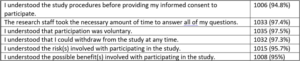
Table 5: Questions About Study Involvement, 2013 to 2022 (n=1,061)
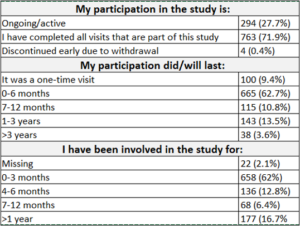
Table 6: Questions About the Research Experience, 2013 to 2022 (n=1,061)
| Questions about Research Experience | Agree/Strongly Agree | |
| I felt the research staff were approachable when I had questions or concerns. | 1,035 (97.5%) | |
| I felt the research staff were easy to contact. | 1,024 (96.5%) | |
| I felt the research staff were sensitive to my needs. | 1,031 (97.2%) | |
| I would be __ to recommend to others that they consider participation in a research study at Ohio State. | ||
| Very Likely | 919 (86.6%) | |
| Likely | 133 (12.5%) | |
| Unlikely | 3 (0.3%) | |
| Very Unlikely | 6 (0.6%) | |
| If I was aware of another research study at Ohio State for which I was eligible and I had time to volunteer, I would be ___ to participate. | ||
| Very Likely | 778 (73.3%) | |
| Likely | 258 (24.3%) | |
| Unlikely | 18 (1.7%) | |
| Very Unlikely | 7 (0.7%) | |
| My research visits went smoothly | 1,034 (97.5%) | |
| I was able to schedule my appointments at a time that worked for me. | 1,019 (96%) | |
| My overall experience in research was positive. | 1,035 (97.5%) | |
Table 7: Odds Ratios and 95% Clinical Investigators Assessing the Odds of a Positive Response for Minorities Compared to Caucasians; Bolded p-values Were Significant at the 0.05 Level
| Question | Odds Ratio (95% Clinical Investigator) | p-value |
| I felt the research staff was approachable when I had questions or concerns. | 2.54 (1.15, 5.60) | 0.0211 |
| I understood the possible benefit(s) involved with participating in the study. | 2.13 (1.20, 3.79) | 0.0098 |
| I felt the research staff was easy to contact. | 1.44 (0.70, 2.97) | 0.3169 |
| I felt the research staff was courteous. | 2.15 (0.96, 4.80) | 0.0616 |
| My overall experience in research was positive. | 2.54 (1.15, 5.60) | 0.0211 |
| I felt the research staff was knowledgeable. | 2.45 (1.15, 5.20) | 0.0198 |
| I felt the research staff was professional. | 2.15 (0.96, 4.80) | 0.0616 |
| I understood the risk(s) involved with participating in the study. | 2.49 (1.36, 4.55) | 0.0032 |
| I was able to schedule my appointments at a time that worked for me. | 2.15 (1.13, 4.07) | 0.0193 |
| I felt the research staff was sensitive to my needs. | 1.99 (0.94, 4.25) | 0.0739 |
| The research staff took the necessary amount of time to answer all of my questions. | 2.23 (1.03, 4.84) | 0.0414 |
| I understood the study procedures before providing my informed consent to participate. | 2.01 (1.14, 3.55) | 0.0165 |
| My research visits went smoothly. | 2.78 (1.28, 6.02) | 0.0095 |
| I understood that participation was voluntary. | 2.15 (0.96, 4.80) | 0.0616 |
| I understood that I could withdraw from the study at any time. | 2.11 (0.98, 4.53) | 0.0559 |
| I would be very likely/likely to recommend to others that they consider participation in a research study at Ohio State. | 0.96 (0.20, 4.66) | 0.9615 |
| If I was aware of another research study at Ohio State for which I was eligible and I had time to volunteer, I would be very likely/likely to participate. | 1.32 (0.54, 3.19) | 0.5402 |
Discussion
Overall, the findings from research participants show that they are satisfied with their experience at the CRC. When participants have a positive experience, they tend to be willing to participate in future studies. This reflects well on the CRC staff and operations, the clinical investigators, and our AMC. The largest strength of the data was the sample size, especially that noted for minorities. However, limitations were noted. Some participants answered Strongly Disagree to questions, yet left positive feedback in the comments section, suggesting that they may have confused Strongly Disagree with Strongly Agree. Some questions were left blank by participants.
After 2013, the survey collected data in reference to research staff in general (not specific to the CRC nurses), which could broadly be interpreted by participants as any staff involved across the study timeline. This was by design, as to make the survey generic enough to be used across the research enterprise of our AMC; however, it could have allowed interpretation as to whom was being referred to among the research staff by the survey. Answers may not have also been about the CRC nurse. The CRC nurse knowledge may be questioned because the patients often ask for details that could only be answered by the study coordinator or clinical investigator.
Changes were instituted based on these results to train the nurses to respond differently to research participants when asked questions outside their study scope. Instead of responding “I don’t know,” the nurses noted they were not involved in that part of the study and asked the study coordinator to share this information with the participant.
An additional limitation was the use of only one AMC. For further external validation of the survey, multiple institutions should be involved.
The results for minorities were statistically significant, showing that they were more likely to respond positively to certain aspects of research participation, including an overall positive research experience. These findings are noteworthy considering historic events, such as the Tuskegee Syphilis Study, that created a mistrust of research on human subjects for some minorities.
The research community is cognizant of the importance of diversity in clinical trials and the necessity to have a research sample that includes minorities to reflect the general population. Having data that show a positive experience for minorities inspires confidence in the ability to recruit this population. It has been noted that representative samples that include racial and ethnic minorities in clinical research are necessary for general public health.{9}
While our findings show that minorities were satisfied with their experience, without strides made toward the continued inclusion of underrepresented groups in research, it is unlikely that the reduction of racial and ethnic inequities pertaining to chronic diseases will occur.{10} Therefore, it is hoped that this study will provide support toward the needed inclusion of minority populations and that their perception of a research experience can be positive.
While the findings reflect the participant experience, they also provide feedback on CRC operations. Results of the surveys are reviewed quarterly and shared with CRC staff in staff meetings. This review allows staff members to discuss positive results and comments with peers and receive kudos for assisting with a positive experience for the participant if a staff member was named. Negative results, trends, or comments are also discussed, so the CRC team can share input on ways to improve the situation or bring awareness to a situation that negatively impacted the participant.
The value of participant satisfaction surveys cannot be stressed enough. Understanding the participant experience at organizations provides a needed perspective that can improve quality in research operations. It also shows participants that their voice matters. As healthcare organizations utilize Press Ganey surveys and other tools to show patient satisfaction, consider the collection of research participant satisfaction data unique to these volunteers.
Acknowledgements
This publication was supported, in part, by the National Center for Advancing Translational Sciences of the National Institutes of Health under Grant Number UM1TR004548. The content is solely the responsibility of the authors and does not necessarily represent the official views of the National Institutes of Health.
The Clinical Research Center is a part of the Center for Clinical Research Management of The Ohio State University Wexner Medical Center and The Ohio State University College of Medicine in Columbus, Ohio.
References
- Adcock S, Sramek J, Hauptmann K, Ding H, Fern K, Cutler N. 2015. Satisfaction of healthy subjects in phase I trials. Applied Clinical Trials 38–44.
- Kim J, Getz K. 2022. Managing patient satisfaction as a primary outcome. Applied Clinical Trials 24–6.
- Heath S. 2020. Are clinical trials doing enough to assess patient quality of life? Patient Engagement HIT. https://patientengagementhit.com/news/are-clinical-trials-doing-enough-to-assess-patient-quality-of-life
- Fisher J, McManus L, Wood M, Cottingham M, Kalbaugh J, Monahan R, Walker R. 2018. Healthy Volunteers’ Perceptions of the Benefits of Their Participation in Phase 1 Clinical Trials. Journal of Empirical Research on Human Research Ethics 13(5):494–510.
- Jiang S, Liu P, Yang S, Yang J, Wu D, Fang H, Qin Y, Zhou S, Xu J, Sun Y, Mo H, Gui L, Xing P, Lan B, Zhang B, Tang L, Sun Y, Shi Y. 2019. Evaluating stress, satisfaction and the associated influencing factors of participants in cancer clinical trials: a cross-sectional study in China. BMJ Open 1–7. doi:10.1136/bmjopen-2018-028589
- Adler PO. 2020. Satisfaction and perceptions of research participants in clinical and translational studies: An urban multi-instituion with CTSA. Journal of Clinical and Translational Science 4:317–22. doi:https://doi.org/10.1017/cts.2020.20
- Pflugeisen BM, Rebar S, Reedy A, Pierce R, Amoroso PJ. 2016. Assessment of clinical trial participant patient satisfaction: a call to action. Trials 17(1):483. doi: 10.1186/s13063-016-1616-6
- Smailes P, Reider C, Hallarn R, Hafer L, Wallace L, Miser W. 2016. Implementation of a Research Participant Satisfaction Survey at an Academic Medical Center. Clinical Researcher 30(3):42–7.
- Omar D, Syder N, Brown-Korsah J, McKenzie S, Elbuluk N, Taylor S. 2022. Racial and ethnic disparities in clinical research and the dermatology workflorce: Part 2. Journal of the American Academy of Dermatology 89(5):895–902.
- Bibbins-Domingo K, Helman A. 2022. Improving Represntation in Clinical Trials and Research: Building research equity for women and underrepresented groups. Washington D.C.: The National Academies Press.
Holly Bookless, BSN, RN, NE-BC, (holly.bookless@osumc.edu) is the Nurse Manager for the Clinical Research Center housed within the Center for Clinical Research Management at The Ohio State University College of Medicine.
Emily Brown is Business Operations Senior Analyst for the Clinical Research Center in the Center for Clinical Research Management at The Ohio State University College of Medicine.
Lisa Hafer, MPH, CCRP, is an Assistant Director of Operations for the Center for Clinical Research Management at The Ohio State University College of Medicine.
Melica Nikahd, MS, is a biostatistician within the Center for Biostatistics at The Ohio State University College of Medicine.
Deanna Golden-Kreutz, PhD, (deanna.golden-kreutz@osumc.edu) is a Senior Director for the Center for Clinical Research Management and Clinical Research Center at The Ohio State University College of Medicine.
Paula Smailes, DNP, RN, CCRP, ACRP-CP, FACRP (paula.smailes@osumc.edu) is the Principal Trainer for Clinical Research as a Health Systems Informatics Analyst 4 at The Ohio State University Medical Center and Visiting Professor with Chamberlain College of Nursing.