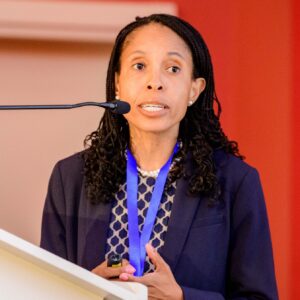
Some parts of the world get much more attention for it than others, but the professionals of the clinical research enterprise are active all over the globe, often through multinational efforts requiring careful coordination and regulatory finesse. In this blog, ACRP is pleased to have Tariro Makadzange, MD, PhD, Chief Executive Officer of the Africa Clinical Research Network, based in Harare, Zimbabwe, and CEO/Founder of the Charles River Medical Group, PVT LTD, based in California and connecting researchers to trials in Africa, share some details on the network’s mission and activities.
Q: Can you please tell us a little about the history, mission, and outreach scope of the Africa Clinical Research Network and what your CEO responsibilities entail for the network?
A: The Africa Clinical Research Network (ACRN) was founded to address one of the greatest inequities in global health—that Africa bears approximately 25% of the global disease burden yet contributes only a small fraction of participants enrolled in regulated clinical trials. This has significant implications for access to innovation, the relevance of medical evidence, and the development of sustainable scientific capacity across the continent.
Our mission is to build a world-class, African-owned clinical research ecosystem that enables high-quality research to be conducted in and for Africa. Rather than creating isolated research sites, we are building an integrated network of clinical research centers, laboratories, investigators, and operational teams that can consistently deliver complex clinical trials to international standards while strengthening local healthcare systems.
Today, ACRN works across multiple African countries, supporting studies spanning infectious diseases, maternal and child health, cardiometabolic disease, oncology, vaccines, diagnostics, and emerging therapeutics. We partner with academic institutions, governments, biotechnology companies, pharmaceutical sponsors, and global health organizations, but our guiding principle remains the same: research in Africa should increasingly be led by African scientists and institutions.
As CEO, my role spans strategic leadership, organizational growth, scientific partnerships, fundraising, governance, and ensuring that every part of the organization remains focused on delivering high-quality, ethical clinical research. A significant part of my work is helping shape the future of clinical research on the continent—building partnerships, investing in people, developing infrastructure, and creating systems that allow African institutions not simply to participate in research, but to lead it.
Q: What is your background in clinical research and how did you first become involved with ACRN?
A: I trained as an infectious diseases physician and immunologist, completing my medical degree at Harvard Medical School before pursuing doctoral research in immunology at the University of Oxford. Throughout my career, I have worked at the intersection of patient care, translational science, and clinical trials, including leading HIV vaccine, infectious disease, and global health research programs.
One of the recurring observations throughout my career was that many of the world’s most important diseases disproportionately affect African populations, yet African investigators often had limited opportunities to lead the studies designed to address them. Too often, research infrastructure was built around individual projects rather than creating lasting institutional capacity.
That realization ultimately led to the creation of ACRN. We wanted to build an organization that invests in people, systems, quality, and long-term capability—not simply execute individual studies. Our goal is to create an enduring research ecosystem that enables Africa to contribute meaningfully to the discovery, evaluation, and delivery of new medicines and technologies.
Q: How is ACRN using ACRP resources to further its goals?
A: Professional development is one of the foundations of ACRN’s strategy. Building sustainable research capacity requires more than infrastructure—it requires highly trained clinical research professionals who understand the principles of Good Clinical Practice, participant protection, quality management, and operational excellence.
ACRP has become an important partner in that journey. We have incorporated ACRP educational resources into our staff development programs and encourage our clinical research coordinators, project managers, monitors, regulatory specialists, and other research professionals to pursue structured learning and professional certification.
What we particularly value is that ACRP provides internationally recognized standards while fostering a culture of continuous learning. As our organization continues to expand across multiple countries, having a common professional framework helps ensure consistency, quality, and excellence across our network.
We see certification not simply as a credential, but as part of building a professional clinical research workforce across Africa that is globally competitive and capable of leading increasingly complex clinical trials.
Q: How can people get involved with ACRN and is there anything else you’d like our audience to know about the network?
A: Clinical research is increasingly a global endeavor, and solving the world’s most pressing health challenges requires meaningful collaboration across regions. We welcome partnerships with investigators, sponsors, contract research organizations, academic institutions, technology companies, and organizations that share our commitment to strengthening research capacity in Africa.
Equally important, we encourage young clinicians, scientists, nurses, pharmacists, laboratory professionals, and research coordinators across Africa to consider careers in clinical research. There has never been a more exciting time to enter the field. Advances in genomics, artificial intelligence, precision medicine, gene therapies, vaccines, and digital health are transforming how clinical research is conducted, and Africa has an opportunity to play a much larger role in shaping that future.
Edited by Gary Cramer